

If you’ve searched for the Florida Roof Age Insurance Law 2026, you may have seen claims that SB 808 or HB 815 created new roof-age protections starting July 1, 2026. That information is incorrect. Both bills died in committee in March 2026 and never became law. Florida homeowners still have important roof-age protections, but they come from existing Florida law.
This guide explains the current rules, what the failed 2026 bills would have changed and what to do if an insurer raises concerns about an aging roof.
What happened to SB 808 and HB 815 in Florida?
Florida Senate Bill 808 and House Bill 815 were identical 2026 proposals addressing roofing requirements for residential property insurance. Both proposed changes to section 627.7011 of the Florida Statutes.
The bills attracted attention because their filed versions listed an effective date of July 1, 2026. That date appears in the bill text and on legislative pages, which can make the proposals look like enacted laws when viewed without their final legislative status.
They did not pass.
The official Florida Senate record for SB 808 shows that the bill died in the Senate Banking and Insurance Committee on March 13, 2026. The official record for HB 815 shows that it died in the House Insurance & Banking Subcommittee on the same date. Neither became a chapter law.
That distinction matters. A filed bill can describe an intended effective date without ever becoming enforceable law.
What SB 808 and HB 815 proposed
The proposed bills would have expanded and modified Florida’s existing roof-age insurance rules. Among other changes, they would have:
- Expanded certain protections from homeowners’ insurance policies to a broader category of property insurance policies covering residential structures.
- Required insurers to distinguish between certain low-slope and steep-slope roofs when offering coverage for roofs at least 15 years old.
- Preserved an inspection pathway for certain older steep-slope roofs.
- Added a proposed option for some low-slope roofs that could be restored with a qualifying roof coating system.
- Expanded the definition of an authorized inspector in specified circumstances.
Because neither bill passed, homeowners shouldn’t rely on those proposed provisions as current law.
| Question | What applies in 2026? |
| Did SB 808 become law? | No. It died in committee on March 13, 2026. |
| Did HB 815 become law? | No. It also died in committee on March 13, 2026. |
| Did a new July 1, 2026 roof-age rule take effect through these bills? | No. The listed date was the proposed effective date. |
| Are there still protections involving roof age? | Yes. Existing section 627.7011 remains important for homeowners’ policies. |
| Can every older roof automatically qualify for renewal? | No. The statute contains conditions and doesn’t eliminate other lawful underwriting requirements. |
The practical lesson is simple: when researching a Florida bill, check its final status rather than relying only on the bill summary, filed text or proposed effective date.
Florida roof age insurance law 2026: The rules homeowners actually have
The current roof-age provision appears in section 627.7011 of the Florida Statutes. It has applied to homeowners’ insurance policies issued or renewed on or after July 1, 2022.
The current Florida roof-age statute creates two important thresholds.
If the roof is less than 15 years old
An insurer may not refuse to issue or renew a homeowners’ policy insuring a residential structure solely because of the roof’s age when the roof is less than 15 years old.
The word “solely” matters.
The statute doesn’t require an insurer to disregard other underwriting issues. An insurer may still have lawful reasons to decline or nonrenew coverage if the property doesn’t meet applicable underwriting criteria or another permitted reason applies.
For example, a 12-year-old roof isn’t automatically guaranteed coverage simply because it falls below the 15-year threshold. Roof condition, property characteristics and other lawful underwriting factors may still matter.
If the roof is 15 years old or older
Once a roof reaches at least 15 years old, Florida law gives the homeowner an inspection option before an insurer can require roof replacement as a condition of issuing or renewing a homeowners’ policy.
The inspection is performed at the homeowner’s expense by an authorized inspector. If that inspection shows the roof has five years or more of useful life remaining, the insurer may not refuse to issue or renew the homeowners’ policy solely because of the roof’s age.
This is one of the most useful provisions for homeowners dealing with a roof age non renewal issue.
It means a roof’s birthday by itself doesn’t necessarily decide the outcome. For qualifying homeowners’ policies, documented remaining useful life can matter.
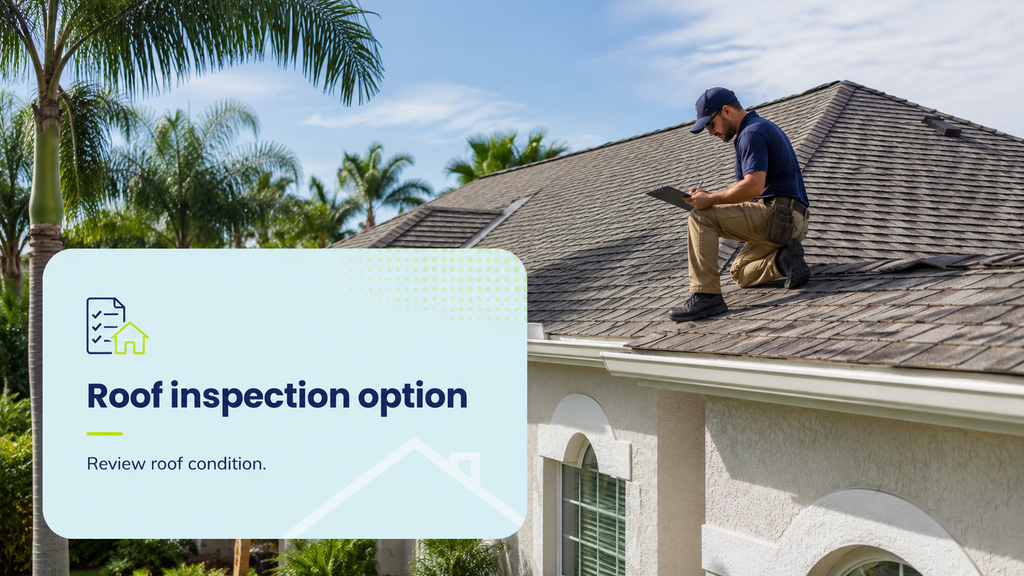
Who can perform the roof inspection?
Under the current statute, an authorized inspector must be approved by the insurer and may include:
- A licensed home inspector.
- A certified building code inspector.
- A licensed general, building or residential contractor or a roofing contractor.
- A licensed professional engineer.
- A licensed professional architect.
- Another individual or entity the insurer recognizes as qualified to perform the inspection.
Don’t assume that any roof inspection you arrange will satisfy your insurer.
Before paying for an inspection, ask the carrier which inspectors it will accept, what report format it requires and whether photographs or other documentation must accompany the report.
How Florida determines roof age for this rule
Section 627.7011 also addresses how roof age is calculated.
Generally, the statute looks to the last date when 100% of the roof surface was built or replaced in accordance with the building code in effect at that time. It also addresses situations involving a series of partial replacements that ultimately resulted in 100% of the roof surface being built or replaced.
That makes documentation important.
If you’ve replaced portions of a roof over several projects, don’t assume the date of the most recent repair automatically becomes the legal age of the entire roof. Keep permits, invoices, contracts and records showing what work was performed.
What the roof age non renewal law does and doesn’t do
Florida’s roof-age protections can be useful, but they’re narrower than some online summaries suggest.
They don’t create a rule that every roof under 15 years old must be insured. They also don’t guarantee that every roof over 15 years old will remain eligible after an inspection.
The current statute specifically says it doesn’t prevent an insurer from rejecting or nonrenewing an applicant for other lawful reasons, including failure to meet certain underwriting criteria. It also doesn’t apply to every insurance policy type.
The law addresses underwriting, not whether roof damage is covered
A roof-age protection involving policy issuance or renewal shouldn’t be confused with coverage for an insurance claim.
Whether a particular leak, wind event, damaged section or full roof replacement is covered depends on the policy, the cause of loss, exclusions, deductibles and other applicable terms. The roof-age statute doesn’t turn normal deterioration or an aging roof into a covered insurance loss.
If you’re dealing with an active claim rather than a renewal issue, review the policy and speak with your insurer or an appropriate insurance professional about the specific loss.
It doesn’t mean a 15-year-old roof must be replaced
Turning 15 doesn’t automatically create a legal replacement deadline.
Instead, the statute establishes an inspection process for a roof that is at least 15 years old before an insurer requires replacement as a condition of issuing or renewing a qualifying homeowners’ policy. If an authorized inspection finds five or more years of useful life remaining, age alone can’t be the reason for refusal.
A roof that has significant deterioration or doesn’t have the required remaining useful life presents a different situation.
It isn’t a five-year roof warranty
An inspection stating that a roof has five years or more of useful life remaining shouldn’t be treated as a guarantee that the roof will remain problem-free for that period.
The statutory standard is relevant to the insurance underwriting protection. Your contractor or inspector should separately explain the roof’s physical condition, maintenance needs and any repairs they recommend.
What to do if your insurer flags your roof’s age
A nonrenewal notice can create time pressure, but replacing a roof immediately isn’t always the first step.
Start by figuring out exactly why the insurer has raised the issue.

1. Read the insurer’s notice carefully
Look for the stated reason for the coverage decision.
Does the notice specifically cite roof age? Does it mention visible deterioration, missing permits, roof condition or another underwriting requirement? Those details affect what you should do next.
Don’t reduce a multi-factor underwriting decision to “my roof is too old” unless that is actually what the notice says.
2. Confirm the roof’s documented age
Gather permits, paid invoices, closing documents and contractor records.
If the roof was fully replaced, confirm the date. If it was repaired or replaced in stages, determine whether the work resulted in 100% of the roof surface being replaced as contemplated by the statute.
If the insurer’s records show the wrong installation date, documentation may resolve the discrepancy without a replacement.
3. Ask whether the statutory inspection option applies
If the roof is at least 15 years old and you’re dealing with a qualifying homeowners’ policy, ask the insurer about the inspection permitted under section 627.7011.
Before scheduling anything, confirm:
- Who the insurer recognizes as an authorized inspector.
- What documentation the insurer requires.
- Where the report must be submitted.
- Whether it has a submission deadline.
- Whether additional inspections or underwriting requirements apply.
Getting those answers first can prevent you from paying for an inspection the carrier won’t accept.
4. Separate useful life from repair needs
An insurance inspection and a contractor’s project assessment serve different purposes.
If an inspector identifies damage or deterioration, ask a licensed roofing contractor to explain whether targeted repairs are reasonable or whether full replacement is warranted. The contractor should also identify permit requirements and provide a written scope of work.
You can review Ygrene’s current overview of roof replacement and roofing financing when a replacement or qualifying repair becomes necessary. Ygrene currently lists roof installation and repair among Florida PACE-eligible project categories, subject to property, project and program eligibility.

5. Compare the cost of replacement with your funding options
If the roof genuinely needs replacement, get a complete project price before deciding how to pay.
Depending on your circumstances, options could include cash, a home-equity product, a personal loan, contractor financing or PACE financing where available and appropriate.
Compare actual terms rather than focusing on the size of one periodic payment.
| What to compare | Why it matters |
| Total project cost | Establishes how much you actually need to finance. |
| Interest rate and finance charges | These affect the total amount paid over time. |
| Repayment period | A longer term may reduce each payment but can affect total financing cost. |
| Payment method | Some products use a separate monthly bill while PACE is repaid through property taxes. |
| Collateral and lien structure | Secured obligations can affect the property and future transactions. |
| Early payoff terms | These matter if you may sell or refinance. |
| Approval requirements | Different financing products use different underwriting criteria. |
| Contractor terms | The construction contract is separate from the financing decision. |
No single option is automatically best for every homeowner. Consider the cost of financing, how long you expect to own the home and how the obligation fits your broader finances.
A hypothetical Florida homeowner example
Suppose a homeowner receives a renewal notice concerning a 17-year-old roof.
The homeowner shouldn’t assume that Florida law automatically requires replacement. The first step is to read the notice and ask whether section 627.7011’s inspection process applies. If an insurer-approved inspector concludes that the roof has at least five years of useful life remaining, the current statute prevents refusal or nonrenewal solely because of roof age.
If the inspection instead identifies extensive deterioration and the homeowner decides to replace the roof, the question changes. The homeowner now needs to compare contractors, project scope and ways to fund the work.
That sequence avoids replacing a functioning roof based only on a misunderstood age rule while still addressing a roof that genuinely needs work.
If replacement is necessary, understand how PACE financing works
Florida homeowners who need a qualifying roof project may be able to explore Property Assessed Clean Energy (PACE) financing through Ygrene.

PACE financing isn’t a conventional personal loan. Ygrene describes it as a voluntary property assessment secured by the improved property and repaid through the property-tax bill. Ygrene also states that the assessment is secured through a recorded lien with priority over existing liens, including mortgages. Ygrene’s PACE program is not a government sponsored program and there is no government assistance available to pay the assessment
That structure creates obligations homeowners should understand before signing.
According to Ygrene’s current explanation of how PACE financing works, residential terms may extend up to 20 years and Ygrene uses a soft credit pull while evaluating applicable underwriting criteria. Approval depends on factors including property equity and ability to repay. Actual eligibility, financing terms and project approval depend on the property and application.
PACE isn’t available at every Florida address. Ygrene currently states that its program operates in approved jurisdictions across 24 Florida counties, with some areas limited by property type. Homeowners should therefore check current Ygrene service areas rather than assuming statewide availability.
Before using PACE for a roof or another improvement, review the financing agreement and confirm:
- The property is in a currently eligible jurisdiction.
- The proposed roof work appears among current PACE-eligible projects.
- The contractor’s total price and scope of work are clear.
- You understand the assessment amount, interest rate, finance charges and total repayment.
- You understand how the assessment will appear through your property-tax payment process.
- You understand the recorded first-priority lien and how a future sale, refinance or early payoff could work.
- You have reviewed the contractor agreement separately from the financing documents.
Ygrene’s current FAQ says residential customers may pay an assessment off early without a prepayment penalty. It also warns that most mortgage lenders require payoff of the remaining PACE obligation as a condition of a sale or refinance, even though property-tax assessments can otherwise be transferable.
If you expect to move or refinance soon, discuss the potential impact with your mortgage lender, real-estate professional or other qualified adviser before committing.
Check the law before replacing a roof because of age
The most important fact for Florida homeowners in 2026 is that SB 808 and HB 815 didn’t become law. The proposed July 1 changes never took effect. Existing section 627.7011 continues to provide the relevant roof-age protections for qualifying homeowners’ policies.
If your insurer has raised a roof-age issue, verify the roof’s age, read the stated reason for the insurer’s decision and ask whether the statutory inspection process applies before assuming replacement is required.
If an inspection or contractor assessment shows that replacement really is necessary, compare the complete project cost and funding choices carefully. Florida homeowners in an eligible jurisdiction can also check whether their property and roofing project qualify for Ygrene PACE financing before reviewing the assessment terms and deciding how to proceed.
This article provides general educational information about Florida insurance rules and home-improvement financing. It isn’t legal, insurance, tax or financial advice. For questions about your policy, rights or individual financial situation, consult the appropriate licensed professional.
FAQs
Did Florida SB 808 become law in 2026?
No. SB 808 died in the Senate Banking and Insurance Committee on March 13, 2026. Although its filed text proposed a July 1, 2026 effective date, the bill never became law.
Did Florida HB 815 take effect on July 1, 2026?
No. HB 815 died in the House Insurance & Banking Subcommittee on March 13, 2026. Its proposed July 1 effective date didn’t become operative because the bill wasn’t enacted.
Can a Florida insurer nonrenew my policy because my roof is under 15 years old?
Under current section 627.7011, an insurer may not refuse to issue or renew a homeowners’ policy covering a residential structure with a roof under 15 years old solely because of roof age. Other lawful underwriting reasons may still apply.
What happens when my Florida roof is more than 15 years old?
For a roof at least 15 years old, the current statute requires an insurer to allow a homeowner to obtain an inspection by an authorized inspector at the homeowner’s expense before requiring replacement as a condition of issuing or renewing a homeowners’ policy. If the inspection finds at least five years of useful life remaining, the insurer can’t refuse to issue or renew solely because of roof age.
Does a roof inspection guarantee that my insurance will be renewed?
No. The statutory protection concerns refusal based solely on roof age. The law doesn’t prevent an insurer from applying other lawful underwriting requirements or making decisions for other permitted reasons.
Can Ygrene PACE financing be used for a Florida roof replacement?
Roof installation and repair currently appear among Ygrene’s eligible Florida PACE project categories. The property must also be located in a participating jurisdiction and satisfy applicable program and underwriting requirements.
Is Ygrene PACE financing a traditional loan?
No. Ygrene describes PACE financing as a property assessment rather than a conventional loan. It is repaid through property taxes and secured by a recorded first-priority lien on the property, so homeowners should review the financing documents, repayment obligations and potential sale or refinance implications before signing. Ygrene’s PACE program is not a government sponsored program and there is no government assistance available to pay the assessment