
For Broward County homeowners facing a major roof replacement, impact-window project or another qualifying repair, paying the full contractor cost upfront may not be practical. PACE financing in Broward County: property owners can access offers another way to fund eligible improvements through a voluntary property assessment.
This guide explains which Broward projects may qualify, how Ygrene PACE financing works, what repayment through property taxes means and what homeowners should review before deciding whether PACE fits their project.
How PACE financing works in Broward County
Property Assessed Clean Energy, or PACE, is a financing structure for certain improvements attached to real property. Florida law authorizes financing for qualifying residential improvements through assessments on eligible properties.
Under Section 163.081 of the Florida Statutes, residential PACE programs must meet requirements involving authorization, financing agreements, disclosures and consumer protections. The law also establishes requirements related to property assessments and the sale of residential properties with outstanding PACE obligations.
That structure differs from taking out a conventional personal loan.
With PACE, a qualifying project can be financed through a voluntary assessment connected to the improved property. The amount financed is secured by a first priority recorded lien on the property and repayment is handled through the property-tax system.
For homeowners researching the PACE program in Broward County, that distinction matters. PACE can provide another way to finance a necessary improvement, but the assessment creates a financial obligation tied to the property.
Broward County’s official PACE program information also makes clear that PACE is financing rather than a government program, rebate, or grant. The County warns homeowners about contractors falsely using Broward County branding to promote PACE services.
Is Ygrene PACE financing available in Broward County?
Ygrene currently lists Broward County among its Florida PACE service areas, with participating locations that include Fort Lauderdale, Hollywood, Miramar, Pompano Beach, Weston, Pembroke Pines, Coral Springs and several other incorporated and unincorporated areas.
Availability still needs to be checked for the individual property. A Broward County address alone shouldn’t be treated as automatic confirmation that the property, homeowner and proposed project qualify.
Homeowners considering Ygrene financing in Broward County can start by checking the current Ygrene Florida service areas before getting too far into contractor or financing decisions.
Who may qualify for residential PACE financing?
PACE eligibility involves more than living in a participating area.
Ygrene evaluates factors such as property equity, the homeowner’s ability to repay the assessment and property-related underwriting requirements. Applicants must also satisfy current program conditions.
Unlike some conventional financing products, Ygrene doesn’t base approval on a homeowner’s credit score. However, it does conduct a soft credit pull to verify certain underwriting criteria.
A homeowner shouldn’t assume that having equity, a qualifying improvement or a particular credit score guarantees approval.
What Broward County home improvements may qualify for PACE?
PACE isn’t intended to finance unrestricted household spending. The improvement must fall within an eligible project category and meet current program requirements.
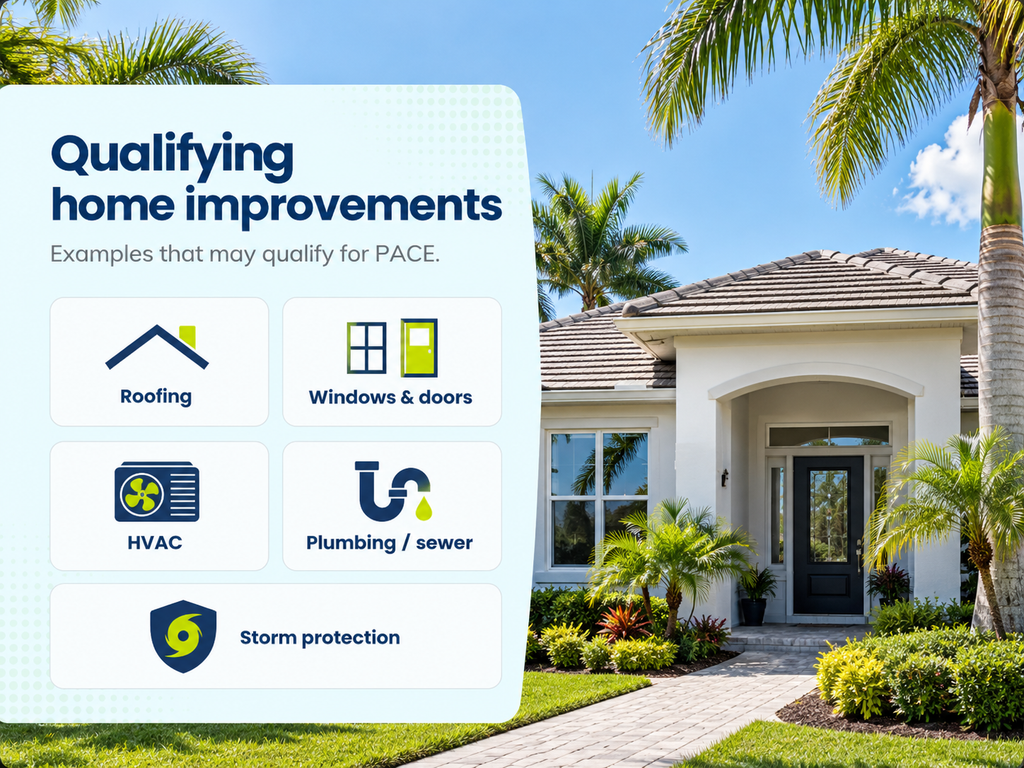
Ygrene currently lists a range of Florida residential improvements, including roofing, impact windows, exterior doors, HVAC equipment, plumbing repairs, sewer work, septic replacement and certain wind-resistance measures.
For Broward homeowners, three categories are particularly relevant: roofing, windows and doors and necessary property-system repairs.
Roof replacement and repair
Roof installation and repair currently appear on Ygrene’s list of PACE-eligible Florida improvements.
A roof project might involve a full replacement, qualifying repair work or another approved roofing improvement. Before financing it, homeowners should get a detailed contractor proposal that explains exactly what the project includes.
For example, a full replacement proposal may need to address:
- Removal and disposal of existing roofing
- Roofing materials being installed
- Underlayment
- Required decking or structural repairs
- Flashing and ventilation work
- Permits and inspections
- Labor costs
- Any additional components included in the contract price
A homeowner in Fort Lauderdale replacing an aging shingle roof may have different project requirements than someone in Weston replacing a tile roof. Materials, roof condition, local permitting requirements and the contractor’s scope all affect the final cost.
Financing shouldn’t replace a careful review of whether the proposed construction work is appropriate for the property.
Homeowners planning this improvement can explore Ygrene’s roof replacement financing options before comparing project costs and assessment terms.
Impact windows and exterior doors
Windows and doors are another important improvement category for Broward properties.
Ygrene currently lists windows, high-impact windows, high-impact doors, sliding glass doors and other qualifying opening protections among its eligible Florida projects.
A homeowner may consider replacing older windows because of storm protection, deterioration, energy performance or a broader renovation.
For example, a homeowner in Hollywood might have several older windows that no longer meet their storm-protection goals. Replacing those openings may involve more than purchasing glass. The project could require new frames, approved installation methods, permits and inspections.
Before moving forward, homeowners should verify the specific products and installation requirements with their contractors.
Important questions include:
- Are the proposed windows or doors appropriate for the property?
- Do the products satisfy applicable building-code requirements?
- Does the quote include installation and necessary finishing work?
- Are permits and inspections included?
- What warranties apply to the products and installation?
- Does the complete project qualify for PACE financing?
Impact-resistant products can provide storm-protection benefits, but homeowners shouldn’t assume that an installation automatically produces an insurance discount. Any possible premium adjustment should be verified directly with the insurance provider.
Plumbing, sewer, HVAC and other repairs
PACE isn’t limited to roofs and windows.
Ygrene’s current eligible-project information also includes categories such as:
- Plumbing repair
- Sewer lateral replacement or repair
- Sewer repiping
- Septic tank replacement
- Septic-to-sewer conversion
- Central HVAC systems
- Mini-split air conditioning
- Duct replacement and sealing
- Certain insulation improvements
- Electrical modernization
- Wind-resistance measures
- Some renewable-energy improvements
These categories can matter when a homeowner is dealing with a necessary repair rather than a planned cosmetic renovation.
For example, a failing sewer line may require excavation or trenchless replacement, while an older HVAC system may need replacement with qualifying equipment.
The fact that a project is necessary doesn’t automatically make it eligible. Homeowners should confirm the specific improvement and any conditions attached to the project category.
Ygrene maintains a current list of PACE-eligible home improvements that can help property owners identify which types of work may qualify.
Broward home improvement eligibility at a glance
| Home improvement | Potential PACE application | What homeowners should verify |
| Roof replacement | Qualifying roof installation or repair | Roofing scope, materials and project eligibility |
| Impact windows | Qualifying window and opening improvements | Product specifications, installation and property eligibility |
| Exterior doors | Eligible exterior doors and wind-resistant products | Product type, installation requirements and project scope |
| HVAC replacement | Qualifying heating and cooling equipment | Equipment specifications and included work |
| Plumbing repairs | Eligible plumbing improvements | Exact repair category and contractor proposal |
| Sewer or septic work | Qualifying sewer repairs, replacements or conversions | Project type and applicable requirements |
| Storm protection | Eligible wind-resistance measures | Specific improvement and program conditions |
The table provides general examples rather than a guarantee of eligibility for any particular property.
How Ygrene PACE financing and property-tax repayment work
The most important financial difference between PACE and many conventional financing products is how the obligation is structured.
With Ygrene PACE financing, the assessment is associated with the improved property. The financing is secured by a first priority recorded lien on the property and repayment is made through the property-tax system.
Homeowners should understand the complete assessment rather than focusing only on whether a project can begin without paying its entire cost upfront.
That means reviewing the contractor’s price, amount financed, interest rate, finance charges, repayment period and total repayment amount.
How the assessment affects property taxes
PACE repayment is generally included as a non-ad valorem assessment on the property-tax bill.
A non-ad valorem assessment isn’t calculated in the same way as a property’s value-based taxes. It is a separate assessment associated with a particular authorized purpose.
For homeowners who pay property taxes directly, the PACE assessment becomes part of the property-tax obligation they need to plan for.
For homeowners whose mortgage payments include tax escrow, the effect can be less obvious.
What happens if your mortgage company escrows property taxes?
Some homeowners pay their property taxes directly. Others have taxes collected through a mortgage escrow account.
Because PACE repayment is connected to property taxes, an additional assessment may affect the amount a mortgage servicer collects for escrow.
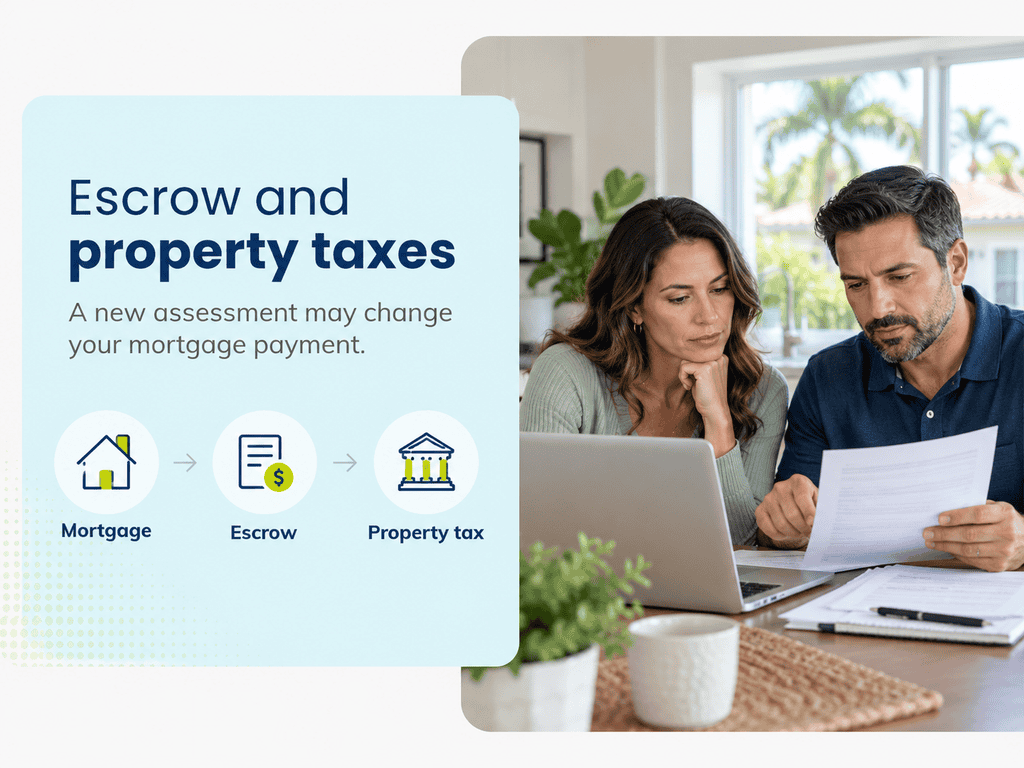
A homeowner considering PACE should ask their servicer:
- How will the assessment affect my escrow account?
- When could the change appear in my mortgage payment?
- Could an escrow adjustment occur after the assessment is added?
- How should I budget for the additional obligation?
Don’t compare PACE with another financing option using only a monthly-equivalent figure. Compare the complete repayment obligation and how it fits into household finances.
What does a PACE lien mean for homeowners?
A PACE assessment creates a recorded obligation associated with the property. A first-priority lien for the total amount financed will be placed on the property as collateral.
This will most likley have implications when a homeowner wants to refinance, sell the property or pay off the assessment early.
Florida’s residential PACE statute includes requirements for assessment agreements, liens and disclosures when selling an affected residential property.
Homeowners should understand that the presence of an outstanding PACE assessment can matter to mortgage lenders, buyers and title professionals.
The assessment shouldn’t be assumed to transfer automatically to a buyer without complications. Nor should a homeowner assume that every lender will handle the obligation in the same way.
What happens if you sell or refinance?
If you’re considering selling or refinancing within the next several years, investigate the possible consequences before signing a PACE agreement.
A mortgage lender will likely have requirements concerning an existing assessment. A buyer may also consider the assessment when evaluating a property purchase.
Depending on the transaction, paying off an outstanding assessment may become part of the discussion.
Homeowners should ask Ygrene about the current payoff process, review their mortgage obligations and consult their lender or real-estate professionals before relying on any particular outcome.
Can you pay off a PACE assessment early?
Ygrene provides a payoff-request process for property owners who want to determine the amount required to satisfy their financing obligation.
However, homeowners should review their specific agreement to understand how a payoff is calculated, whether additional charges apply and how the timing of a payoff may affect the remaining obligation.
A payoff quote should be obtained when needed rather than estimating the balance from previous assessment payments.
A Broward roof replacement example
Consider a hypothetical homeowner in Fort Lauderdale whose contractor says the home’s aging roof needs replacement.
The homeowner receives a detailed proposal but doesn’t want to use all available cash reserves for the work.
They consider several possible ways to pay, including savings, a home-equity product, a personal loan, contractor financing and PACE.
The homeowner is interested in Ygrene PACE because the project may qualify and repayment is structured through a property assessment.
Before proceeding, however, they need to establish whether the financing makes sense for their property and finances.
Step 1: Confirm the property is in a participating area
The homeowner checks whether Ygrene currently serves the property address.
They also verify that the proposed roofing work qualifies under current program requirements.
Step 2: Review the roofing estimate
The contractor provides a written proposal identifying the materials, labor, permits and other included work.
The homeowner compares the scope with other appropriate estimates rather than financing the first price received without review.
Step 3: Evaluate the financing terms
The homeowner reviews the complete assessment agreement, including the amount financed, interest rate, fees, repayment schedule and total repayment obligation.
They also check how the assessment would affect their annual property taxes and mortgage escrow arrangements.
Step 4: Consider future property plans
The homeowner expects they may relocate within several years.
Before signing, they ask how an outstanding assessment could affect a future sale, what a payoff would involve and whether their mortgage lender has relevant requirements.
Step 5: Compare realistic financing alternatives
Finally, the homeowner compares PACE with other options available to them.
A balanced comparison might look like this:
| Financing option | Potential consideration | Important tradeoff |
| Cash savings | No financing agreement needed | Reduces available cash reserves |
| Personal loan | Separate installment repayment structure | Rates, fees and qualification requirements vary |
| Home-equity financing | May provide access to funds based on available equity | Uses the home as collateral and has lender requirements |
| Contractor financing | May be offered alongside the project | Terms and total financing costs vary |
| PACE financing | Repayment through a property assessment | Creates a property-related obligation that may affect taxes, sale or refinance |
PACE could fit this homeowner’s circumstances, or another funding option could make more sense.
The decision depends on available cash, financing costs, repayment preferences, qualification requirements and future plans for the property.
What Broward homeowners should review before using PACE
A necessary repair can create pressure to move quickly, especially when a roof is leaking or an HVAC system has stopped working.
Financing still deserves the same care as the construction contract.
Confirm the property and project first
Start by verifying that Ygrene currently serves the property’s jurisdiction and that the proposed improvement is eligible.
Don’t rely only on a contractor’s statement that the work should qualify.
The property and project should both satisfy current program requirements before the homeowner treats PACE as an available funding source.
Get a complete contractor proposal
A good proposal should explain exactly what the homeowner is purchasing.
Ask what materials, labor, permits, disposal costs, related repairs and warranties are included.
If the contractor anticipates additional work once construction begins, ask how potential change orders will be handled.
Homeowners should also verify the contractor’s license, insurance and applicable permitting responsibilities.
The Florida Department of Business and Professional Regulation provides an official resource for checking professional licenses, including those associated with regulated construction trades.
This verification is particularly useful before entering a significant roofing, window-installation or property-repair agreement.
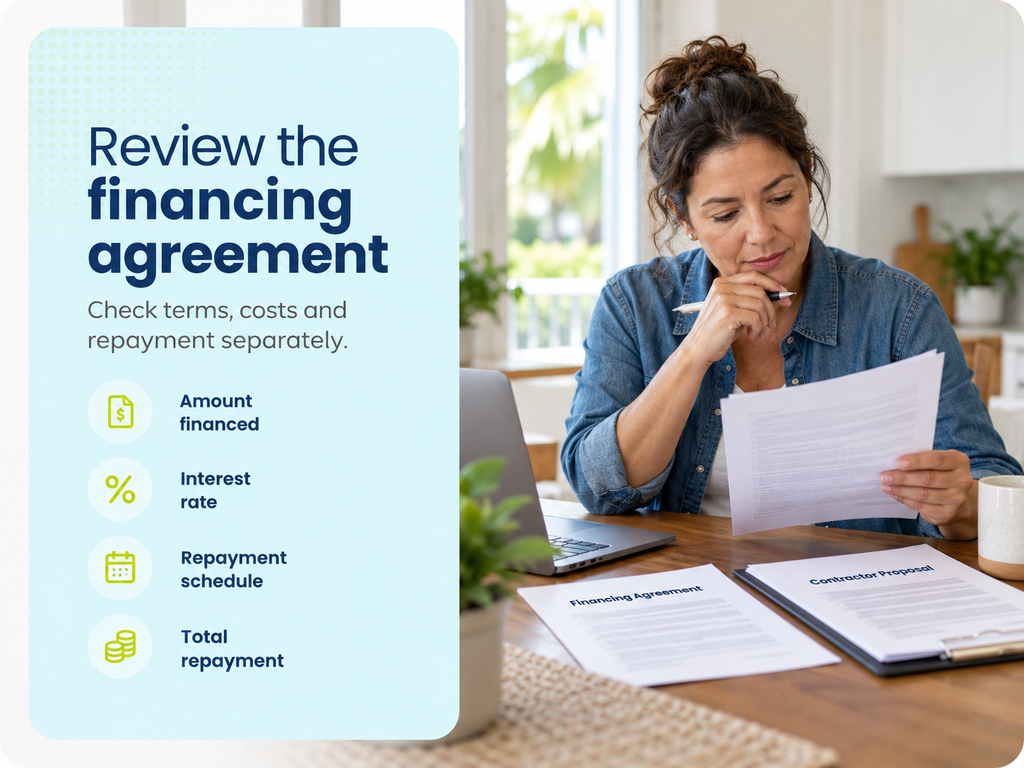
Review the financing agreement separately
Don’t treat contractor paperwork and PACE financing paperwork as one document.
Each agreement serves a different purpose and may create different obligations.
Review the financing agreement for:
- Amount financed
- Interest rate
- Finance charges
- Total repayment amount
- Repayment schedule
- Property assessment
- Recorded lien
- Early-payoff provisions
- Sale or refinance considerations
- Cancellation rights
- Other required disclosures
If something isn’t clear, ask for an explanation before signing.
Understand who performs the work
Ygrene provides financing for qualifying improvements, while the contractor performs the installation or repair.
Homeowners remain responsible for reviewing the contractor agreement, understanding the project scope and confirming applicable requirements.
Financing approval shouldn’t be treated as a guarantee of construction quality, proper permitting or contractor performance.
Compare the full cost of every financing option
A useful comparison goes beyond the amount due immediately.
Evaluate:
- Upfront cash required
- Qualification requirements
- Interest rate and fees
- Repayment period
- Total financing cost
- Payment method
- Whether the obligation is secured
- Consequences of early payoff
- Sale and refinance considerations
- Project restrictions
A longer repayment period may reduce the amount due at any one time, but it can also affect the total amount paid over the financing period.
Review both affordability and total cost.
Understand your consumer protections
Florida’s residential PACE laws establish requirements intended to help homeowners understand financing obligations before entering an agreement.
These requirements address matters such as disclosures, program administration, assessment agreements and other consumer safeguards.
Homeowners should read all required documents, ask questions about unfamiliar terms and take time to understand the consequences of the financing.
They should also be cautious about contractors presenting PACE as guaranteed approval, free government funding or a way to eliminate the financial responsibility for repairs.
Ygrene’s current disclosures confirm that its PACE financing isn’t a government-sponsored grant and that improvements are installed by contractors rather than Ygrene or a government agency.
Check your Broward property and project before moving forward
For an eligible Broward County homeowner facing a roof replacement, impact-window installation, HVAC project or another qualifying repair, PACE may provide another way to spread the cost of the improvement over time.
The next step isn’t simply choosing financing.
First, confirm that the property and project are currently eligible. Then review the contractor proposal, complete financing cost, property-tax assessment, recorded lien and any possible sale or refinance implications.
If PACE remains a suitable option after that review, homeowners can check their eligibility for Ygrene PACE financing in Broward County and request information about the financing terms that may apply to their property.
Where a decision could affect taxes, a mortgage, insurance or a future real-estate transaction, consider discussing those issues with the appropriate financial, tax, insurance, mortgage or legal professional.
FAQs
Is PACE financing available in Broward County?
Yes. Ygrene currently lists multiple participating Broward County municipalities and unincorporated areas among its Florida service locations. However, being located in Broward doesn’t automatically mean a property or homeowner qualifies for financing.
Can I use PACE financing for a new roof in Broward County?
Roof installation and repair are currently included among Ygrene’s eligible Florida improvements. The proposed roofing work and property must still meet current program requirements before financing can be approved.
Can PACE finance impact windows in Broward?
Yes, qualifying high-impact windows and certain exterior doors appear on Ygrene’s eligible-project list. Homeowners should confirm the exact products, installation scope and property eligibility before committing to the project.
Is Ygrene PACE financing a loan?
PACE financing has a different structure from a conventional personal loan. It uses a property assessment secured by a first priority recorded lien on the property, with repayment handled through the property-tax system rather than through a separate monthly personal-loan payment.
Does Ygrene check credit?
Ygrene states that it doesn’t use a homeowner’s credit score as the basis for approval, although it conducts a soft credit pull to verify certain underwriting criteria. Approval depends on satisfying applicable property, repayment and program requirements.
What happens to PACE financing if I sell or refinance my Broward home?
An outstanding PACE assessment will likley affect a sale or refinance because the financing is secured by the property. Homeowners should speak with their mortgage lender, ask about payoff requirements and review the terms of their agreement before assuming the assessment can remain in place after a transaction.
Is the Broward PACE program a government grant?
No. PACE is a financing arrangement, not a government program, rebate, or grant. Although local government authorization is part of the program structure, homeowners remain responsible for the assessment and associated financial obligations.