
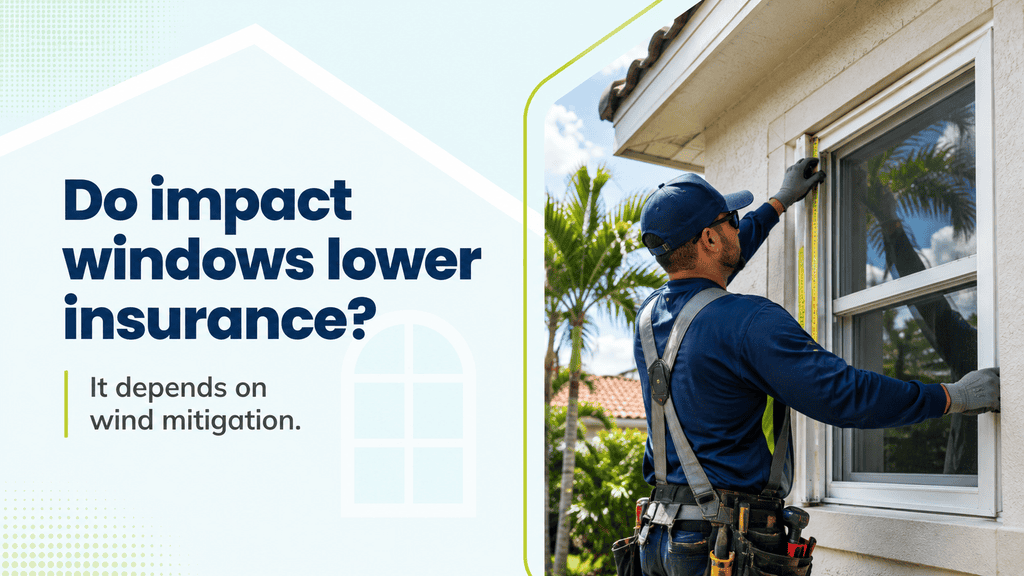
Do impact windows lower insurance Florida homeowners pay? They can. Florida law requires residential property insurers to account for qualifying hurricane mitigation features, including opening protection, in their rates. Impact windows may help your home qualify for a wind mitigation credit, but installing new windows doesn’t guarantee a specific discount.
This guide explains what insurers look for, why whole-home opening protection matters, how a wind mitigation inspection works and what to check before replacing your windows.
How impact windows can lower Florida homeowners insurance
Impact-resistant windows are designed to help protect glazed openings from windborne debris during severe storms. For insurance purposes, that can make them a wind mitigation feature.
Florida law requires residential property insurance rate filings to include appropriate discounts, credits or other rate differences for construction features shown to reduce windstorm losses. The law specifically identifies features such as opening protection and the strength of windows, doors and skylights. You can review these requirements in Florida Statutes section 627.0629.
That means qualifying impact windows may reduce the windstorm portion of a homeowner’s premium when the improvement is properly documented. The actual effect depends on the home’s construction, the protection installed, the insurer’s filed rating plan and other characteristics of the policy.
Florida’s Department of Financial Services also explains that mitigation improvements can make a property eligible for discounts on the windstorm portion of an insurance premium. Impact-resistant windows are one of the improvements the department recommends homeowners consider.
There are two important limits to keep in mind.
First, a hurricane windows insurance discount isn’t a fixed percentage available to every homeowner. Your insurance company determines the credit that applies under its approved rating structure.
Second, your windows are only one part of the home’s overall wind mitigation profile. An insurer can consider your roof, roof-to-wall connections, building code, secondary water resistance and opening protection when calculating applicable credits.
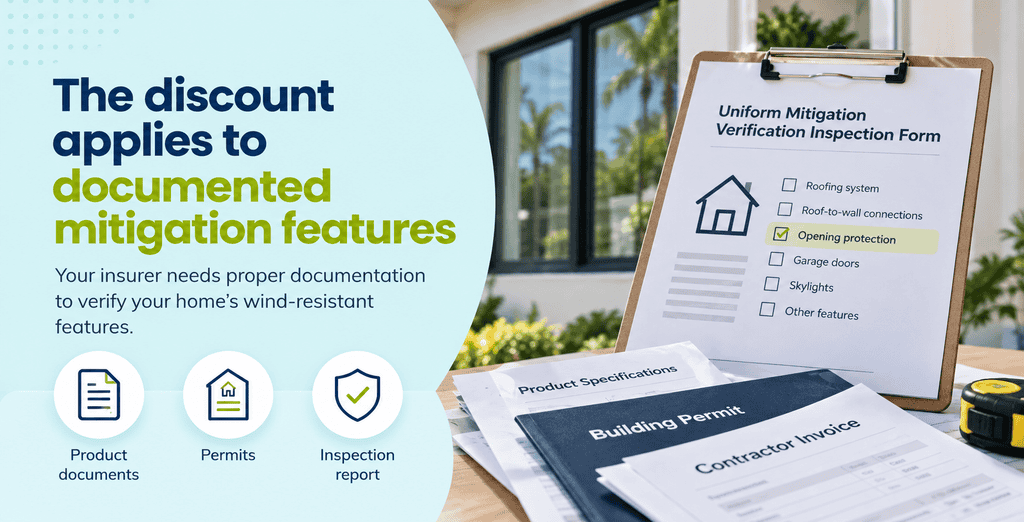
The discount applies to documented mitigation features
Buying a product labeled “hurricane window” doesn’t automatically change your insurance premium.
Your insurer needs evidence of the qualifying characteristics of the home. Florida uses the Uniform Mitigation Verification Inspection Form for this purpose. The state’s current form asks specifically about the weakest level of windborne debris protection across the home’s glazed and non-glazed openings.
That distinction matters because an insurance company isn’t simply asking, “Does this house have some impact windows?” It may need to know whether all relevant openings meet a recognized protection standard.
Why whole-home opening protection matters
Homeowners sometimes replace the most exposed windows first, then assume that those upgrades will produce the same insurance benefit as protecting the entire building envelope.
The wind mitigation process is more specific.
The current Uniform Mitigation Verification Inspection Form evaluates opening protection across categories that can include:
- Windows and glazed entry doors
- Garage doors
- Skylights
- Glass block
- Non-glazed entry doors
- Non-glazed garage doors
The form directs the inspector to determine the protection level based on the weakest applicable protection across the openings being evaluated.
As a result, installing impact windows while leaving other vulnerable openings unprotected may produce a different insurance result than protecting all qualifying openings.
Consider a hypothetical Florida house with new impact-rated windows throughout the living areas but an older garage door that doesn’t have verified windborne debris protection. The homeowner has made a meaningful storm-resistance improvement, but an insurer may not classify the property the same way it would classify a house where every relevant opening meets the required protection level.
This is one reason to talk with your insurer before committing to a major window replacement project.
Ask what documentation it requires and whether other doors, garage openings or skylights could affect the wind mitigation classification.
Impact glass and shutters can both count as opening protection
Impact-resistant windows aren’t the only way to protect openings.
The Florida mitigation form recognizes qualifying impact-resistant products as well as qualifying protective coverings. Depending on the property and product documentation, approved shutters or other windborne debris protection may also satisfy applicable standards.
For a homeowner deciding between windows and shutters, insurance is only one factor. Impact windows offer permanent protection without requiring deployment before a storm. Shutters may have a lower initial project cost but have to be installed, closed or otherwise deployed when needed.
The right choice depends on your home, budget, building requirements and insurer.
If you’re considering replacing existing windows or doors, Ygrene’s current windows and doors project page explains how qualifying projects may be financed through PACE in participating Florida jurisdictions.
How a Florida wind mitigation inspection affects your discount
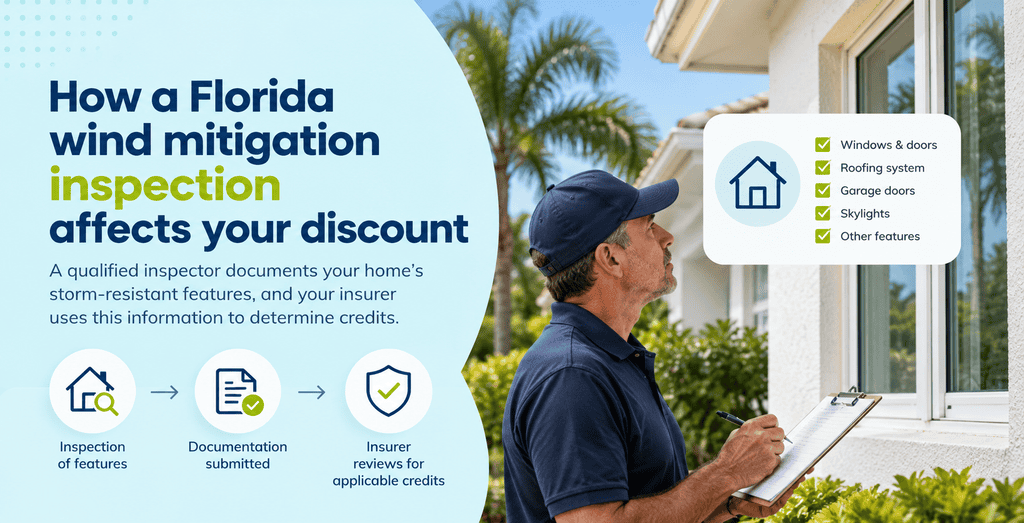
A wind mitigation inspection gives your insurer standardized information about storm-resistant features already installed on your home.
Florida requires admitted insurers to notify residential policyholders about available hurricane loss mitigation discounts when issuing and renewing policies. Insurers must also accept a valid Uniform Mitigation Verification Inspection Form when it has been completed and signed by an eligible professional.
According to the Florida Department of Financial Services, eligible professionals can include appropriately qualified licensed home inspectors as well as certain contractors, engineers, architects and building code inspectors.
The inspector isn’t setting your insurance rate. Their job is to document qualifying characteristics of the property. Your insurer uses that information when determining which credits or discounts apply.
What the inspector may review
A wind mitigation inspection covers more than windows.
Depending on the home, the form can document construction and protection characteristics such as the building code under which the property was built, roof covering, roof deck attachment, roof-to-wall connections, roof geometry, secondary water resistance and opening protection.
For the opening protection section, the inspector may need product documentation showing that a window, door, shutter or other protective system meets an accepted testing or approval standard.
This is where paperwork becomes important.
Keep copies of:
- Contractor invoices that identify the products installed
- Building permits where applicable
- Product approval information
- Manufacturer specifications
- Previous wind mitigation inspection reports
- Final inspection documents related to the work
Don’t assume the inspector can classify every product by appearance alone. Florida’s form includes categories for products that appear to provide certain protection but can’t be verified.
When should you get a new wind mitigation inspection?
If you’ve completed a major improvement that changes a documented mitigation feature, such as replacing non-impact windows with qualifying impact-resistant products, ask your insurer whether it needs a new inspection.
You don’t necessarily need to wait until the next renewal to ask. Contact the carrier or agent and find out what documentation it accepts and when a new credit could take effect.
Florida Statutes section 627.711 requires insurers to notify applicants and policyholders about available hurricane mitigation discounts, credits and related rate differences.
That gives homeowners a useful starting point: ask for the insurer’s current mitigation discount information before planning the project.
How to estimate whether impact windows are worth it for insurance
Insurance savings can be part of your decision, but they shouldn’t be the only financial reason you replace windows.
A contractor can quote the project cost. Your insurer can explain the possible credit. Those numbers should be compared before you treat insurance savings as part of the project’s financial case.
A useful comparison looks like this:
| What to review | What to find out before installation |
| Current insurance premium | Identify how much of your premium relates to windstorm coverage and ask which mitigation credits already apply. |
| Current opening protection | Find out whether your existing windows, doors, shutters, garage door and skylights already receive credit. |
| Proposed products | Confirm the windows have the approvals and documentation your inspector and insurer will need. |
| Scope of the project | Determine whether all relevant openings will be protected or only selected windows. |
| Expected insurance treatment | Ask the insurer what additional credit could apply after the project is documented. |
| Project cost | Obtain a detailed contractor proposal covering materials, labor, permits and other charges. |
Don’t assume that a quoted insurance saving will continue unchanged for the life of the windows. Insurance rates, property characteristics, coverage selections and insurer rating plans can change.
A practical Florida homeowner example
Suppose a homeowner is replacing 15 older windows.
Before signing the contract, they call their insurance company and learn that their current wind mitigation inspection doesn’t show qualifying opening protection. They also discover that the front door and garage door are part of the home’s opening-protection picture.
Instead of evaluating only the window quote, the homeowner asks three additional questions:
- Will the proposed windows meet the standards required for the insurer’s opening-protection credit?
- Will leaving the existing garage door and front door unchanged affect that classification?
- What documents will a wind mitigation inspector need after installation?
Those questions may affect both the project scope and the estimated insurance benefit.
That’s more useful than choosing windows based on a contractor’s general statement that “impact windows lower insurance.”
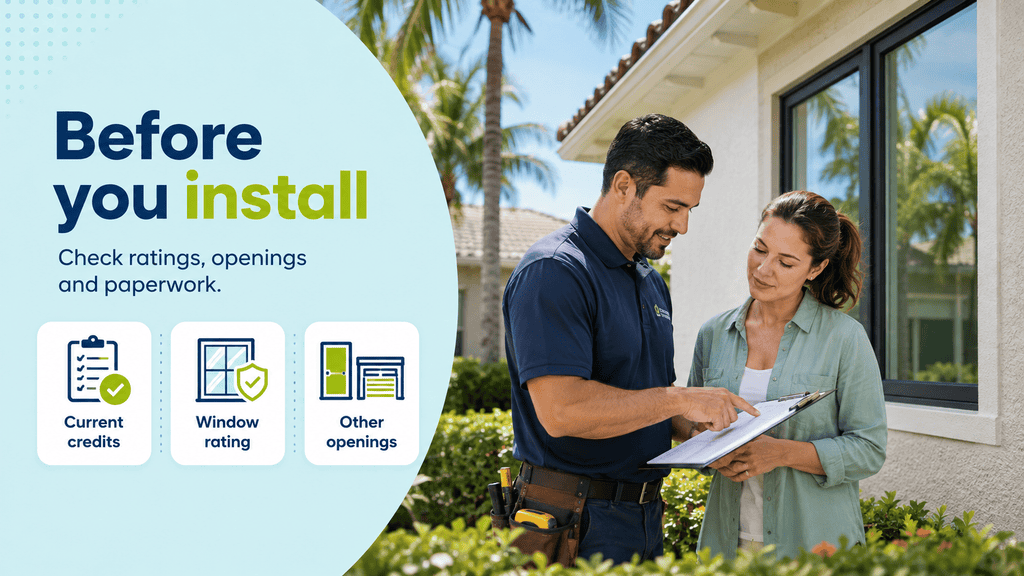
What to check before installing impact windows for an insurance discount
If insurance savings are one of your goals, use this process before signing a window contract.
1. Ask your insurer what you currently receive
Start with your existing policy.
Ask which wind mitigation credits already apply and request information about the insurer’s available hurricane mitigation discounts. This helps you avoid paying for an upgrade based on a benefit you’re already receiving through another form of opening protection.
2. Review your existing wind mitigation report
If you have a previous inspection, look at the opening-protection section.
Check how the inspector classified windows, doors, skylights, glass block and garage openings. An older report can also show whether other parts of the home already qualify for mitigation credits.
3. Confirm exactly what the proposed windows are rated for
Don’t rely only on words such as “storm,” “hurricane” or “impact.”
Ask the contractor for the applicable product approval and documentation. Florida’s insurance inspection form references specific testing and approval standards for qualifying opening-protection products.
4. Check every opening, not only the windows
Walk around the property and make a list of openings.
A house with impact windows may still have an unprotected sliding door, garage door, skylight or entry door. Ask your insurer or qualified inspector how those openings affect your mitigation classification.
5. Keep the installation documentation
Save invoices, approvals, permits and final inspection paperwork.
You’ll want documentation available when the wind mitigation inspection is completed and if your insurance company later asks for proof.
6. Schedule the appropriate inspection
Once the improvement is complete, ask your insurer whether it requires a new Uniform Mitigation Verification Inspection Form.
Use a professional who is qualified under Florida’s requirements to complete and sign the form.
7. Send the documentation to your insurer
Submitting a wind mitigation report doesn’t itself guarantee a particular premium.
Ask the insurer to confirm which credits have been applied and request an updated premium calculation or policy information so you can see the actual effect.
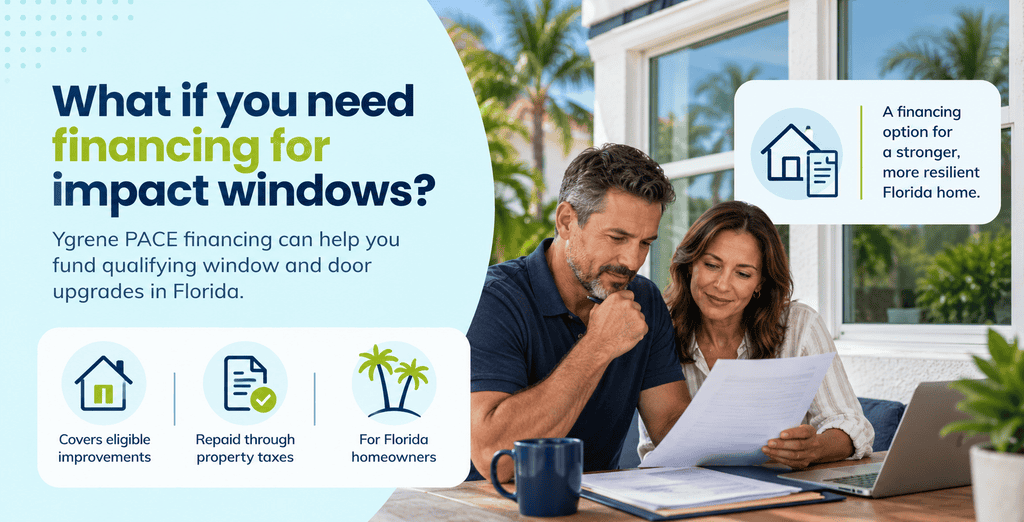
What if you need financing for impact windows?
Impact windows can require a substantial upfront investment, particularly when a homeowner needs to protect many openings at once.
Florida homeowners generally have several ways to pay, including cash, home-equity financing, personal financing, contractor financing or PACE financing where available. The right choice depends on qualification requirements, cost, repayment structure and your future plans for the property.
Ygrene currently lists windows and doors among eligible Florida PACE projects, though project eligibility and available terms depend on the property, improvement and service area.
PACE stands for Property Assessed Clean Energy. It isn’t a conventional personal loan. With Ygrene PACE financing, the financing is structured as an assessment on the property and repayment is made through the property tax bill. The property secures the financing through a recorded first-priority lien. PACE is not a government sponsored program and there is no government assistance available to pay the assessment.
Homeowners considering PACE should review the financing agreement carefully, including the assessment amount, interest rate, finance charges, repayment term, total repayment, property-tax impact and early-payoff provisions.
Sale and refinance considerations also deserve attention. Ygrene’s current FAQ explains that mortgage lenders will very likely require the outstanding PACE assessment to be paid off when a homeowner sells or refinances, even though property taxes themselves can transfer.
PACE availability also depends on location. Ygrene currently operates in approved jurisdictions across 24 Florida counties, so homeowners should verify their specific address before treating PACE as a financing option.
Ygrene’s consumer protection information also describes its financing agreement review, disclosures and first-payment reminders. These materials don’t replace your own review of the contract or advice from a financial, tax, mortgage, legal or insurance professional when needed.
Check the insurance details before you replace your windows
Impact-resistant windows may help a Florida home qualify for wind mitigation credits, but the useful question isn’t simply whether impact windows reduce insurance.
Find out what your insurer recognizes, what protection your home already has and whether every relevant opening will meet the required standard. Then compare the documented insurance benefit with the full cost and other reasons for completing the project.
If impact windows or doors are part of your plan and paying the full project cost upfront isn’t practical, you can check whether your property and project are eligible for Ygrene PACE financing. Review the complete financing terms and property-tax obligations before deciding whether PACE fits your situation.
FAQs
How much can impact windows lower homeowners insurance in Florida?
There’s no single percentage that applies to every Florida homeowner. Your savings depend on your insurer’s filed rates, the mitigation features documented on your property and the protection level assigned during the wind mitigation process.
Ask your insurer to estimate the difference using your actual property and proposed improvements rather than relying on a general savings claim.
Do I automatically get an insurance discount after installing hurricane windows?
No. You generally need to document qualifying mitigation features in the manner required by your insurer.
A wind mitigation inspection using Florida’s Uniform Mitigation Verification Inspection Form is commonly used to document features such as opening protection.
Do all my windows need to be impact resistant to get a discount?
The answer depends on the credit being considered and the home’s other openings. Florida’s mitigation form evaluates the weakest protection level across applicable openings, which means unprotected doors, garage doors, skylights or other openings may affect the classification.
Ask your insurer or qualified wind mitigation inspector how a partial window replacement would be treated before starting work.
Are hurricane shutters eligible for wind mitigation credits too?
Qualifying shutters and other approved protective coverings can count as opening protection. The product and installation need to meet the applicable standards and be documented appropriately.
A homeowner therefore shouldn’t assume impact glass is the only way to improve the opening-protection portion of a wind mitigation inspection.
How long does a wind mitigation inspection last in Florida?
The appropriate timing for a new inspection can depend on your insurer, the existing report and whether the home has changed since it was completed. If you install new windows, doors, roofing or other mitigation features, ask your insurer whether updated documentation is needed.
The safest approach is to confirm the carrier’s current requirements rather than assuming an older inspection will document newly installed improvements.
Can Ygrene finance impact windows in Florida?
Impact windows and doors are among the project categories Ygrene currently identifies as eligible for PACE financing. Actual eligibility depends on your property, project and whether Ygrene operates in the applicable participating jurisdiction.
Ygrene PACE financing is a property assessment rather than a conventional personal loan and is repaid through property taxes. With PACE financing, a first-priority lien for the total amount financed will be placed on the property as collateral.
Should I install impact windows only to lower my insurance?
Insurance savings can help offset part of the project cost, but they aren’t guaranteed and shouldn’t be assumed before you receive information from your insurer.
Compare the full project cost with the documented insurance effect and the windows’ other practical functions, including permanent opening protection. That gives you a better basis for deciding whether the project makes sense for your home.