
For homeowners researching PACE financing in Orange County, the Orlando area, the first question is whether PACE is actually available where the property is located. Ygrene currently lists several Orange County communities within its Florida service area, including Orlando, Apopka and Winter Park.
This guide explains how PACE financing works in the Orlando area, what types of improvements may qualify, how repayment affects the property and what homeowners should review before agreeing to an assessment.
Where is PACE financing available in Orange County?
PACE stands for Property Assessed Clean Energy. It provides financing for qualifying improvements to a property through an assessment secured by the property rather than through a conventional unsecured personal loan.
Availability is determined locally. That distinction matters in Orange County because living somewhere in the broader Orlando metropolitan area doesn’t automatically mean a property is eligible for a particular PACE program.
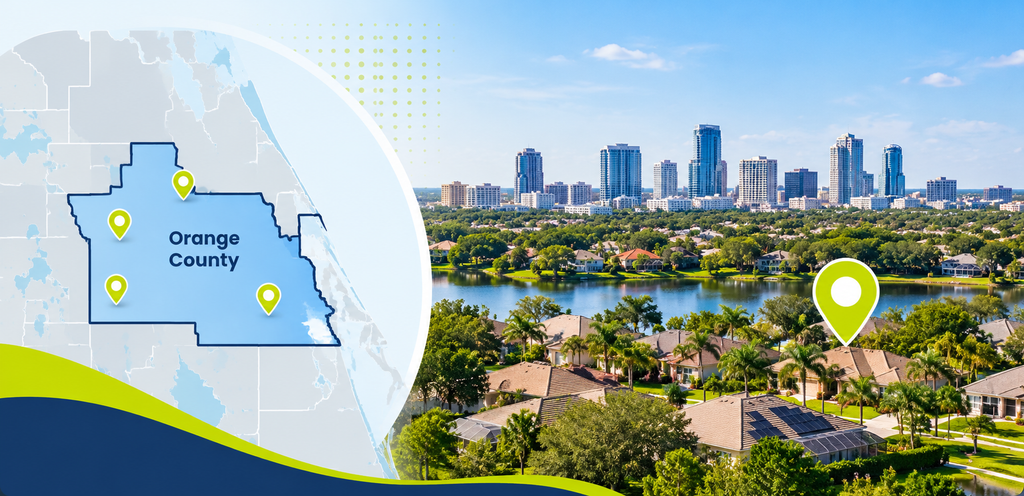
According to Ygrene’s current Florida service area information, its Orange County coverage includes:
- Orlando
- Apopka
- Winter Park
- Winter Garden for commercial properties only
Ygrene’s service-area information can change and eligibility ultimately depends on the individual property, jurisdiction and program requirements. Homeowners should therefore check the actual property address rather than assuming eligibility based solely on the county name.
This is especially useful around Central Florida, where a mailing address may say “Orlando” even when the property sits outside the City of Orlando’s municipal boundaries. The jurisdiction attached to the property can matter for PACE availability.
What about unincorporated Orange County?
Homeowners outside Orlando, Apopka or Winter Park shouldn’t assume that residential Ygrene financing is available simply because the property is located somewhere in Orange County.
The safest approach is to use Ygrene’s current service-area and property eligibility tools for the exact address. Program boundaries can be more specific than a general county map.
Likewise, someone searching for the Orlando PACE program should distinguish between residential PACE availability and commercial PACE programs. Orange County has separately authorized commercial Property Assessed Clean Energy financing, often referred to as C-PACE, for eligible commercial properties.
This article focuses primarily on homeowners and residential property improvements.
How PACE Financing Works for Orange County, Orlando-Area Homeowners
PACE financing helps pay for qualifying improvements that are permanently connected to a property. Rather than taking out a conventional personal loan and making a separate monthly payment, the property owner enters into a financing agreement that results in an assessment associated with the property.
With Ygrene, repayment is made through the property-tax system. Ygrene also states that the financing is secured by a first-priority recorded lien on the improved property.
That property-based structure is one of the most important things to understand before comparing PACE with other financing choices.
Florida law provides the framework for local PACE programs and qualifying property improvements. Homeowners who want the legal details can review the current Florida Statutes governing PACE programs. Federal regulators also describe PACE as home-improvement financing that results in an assessment on the consumer’s real property.
PACE isn’t a government program or grant
A local government may authorize PACE within its jurisdiction, but that doesn’t make the financing a government program, grant, rebate or free repair program.
Ygrene specifically states that its PACE program isn’t government sponsored and that government assistance isn’t provided to pay the assessment. The contractor performs the home-improvement work rather than Ygrene or the government.
The Consumer Financial Protection Bureau similarly explains that the federal government doesn’t pay for or insure residential PACE financing.
That distinction is worth keeping in mind when a contractor or advertisement introduces PACE as a way to pay for a project.
How qualification differs from conventional lending
PACE underwriting can differ from a typical personal loan or credit-card application.
Ygrene’s current information says there is no minimum credit score requirement. It does complete a soft credit pull to verify certain underwriting criteria and the soft inquiry doesn’t affect the applicant’s credit score. Property equity, ability to pay, and other requirements also affect eligibility.
This doesn’t mean every property owner will qualify. Approval depends on the property, the applicant and the current program requirements.
Homeowners considering Ygrene financing in the Orlando area should review how Ygrene PACE financing works and confirm eligibility before treating PACE as part of the project budget.
What home improvements may qualify in the Orlando area?
PACE isn’t intended to finance unrestricted remodeling or general consumer spending. The proposed work must fall within an eligible improvement category and meet applicable program requirements.
Ygrene currently lists hundreds of potentially eligible improvements in Florida. Major residential categories include roofing, HVAC, windows and doors, storm-resistant improvements, sewer and septic work, energy-efficiency projects, solar and certain water-heating improvements.
Before signing a contractor agreement based on expected financing, homeowners should check Ygrene’s current PACE-eligible project list.
Some examples particularly relevant to Central Florida homes include the following.
Roof installation or repair
Ygrene currently lists roof installation and repair among eligible building-envelope improvements. Wind-resistant roofing and several roof-strengthening measures also appear among its eligible wind-resistance projects.
A qualifying roof project might involve replacing an aging roof or incorporating eligible wind-resistance measures. Actual project eligibility still needs to be confirmed before financing.
Homeowners should also make sure the contractor’s proposal clearly identifies what is being installed, the complete project price, permit responsibilities, warranties and any work that isn’t included in the quoted amount.
Impact windows, doors and storm protection
Windows, exterior doors and several storm-resistance measures may also qualify.
Ygrene’s current Florida project list includes high-impact windows, high-impact doors, storm shutters, opening protection, roof-to-wall reinforcement, secondary water barriers and other wind-resistant measures.
For an Orlando-area homeowner considering storm-related upgrades, the useful question isn’t simply whether “windows qualify.” It is whether the specific products, installation and property meet the current program requirements.
The contractor should also separately confirm that the proposed work satisfies applicable permitting and building-code requirements. PACE financing doesn’t replace that process.

HVAC replacement
Central HVAC systems, mini-split systems, duct replacement, duct sealing and several types of heat pumps are among the HVAC-related improvements currently identified by Ygrene as potentially eligible.
For a homeowner replacing an older cooling system, financing should be evaluated alongside the actual equipment proposal. Compare system specifications, contractor cost, warranty coverage and the complete financing obligation rather than choosing a project based only on whether financing is available.
Plumbing, septic and sewer work
Some less obvious home projects may qualify as well.
Ygrene currently lists plumbing repair, sewer lateral replacement or repair, sewer repiping, septic tank replacement, septic-to-sewer conversion and trenchless sewer work among its Florida sewerage categories.
That can make PACE worth investigating when a qualifying infrastructure repair is substantial enough that paying the full cost upfront would be difficult.
Solar and energy-efficiency projects
PACE originated around energy-related property improvements and qualifying renewable-energy work remains part of the program.
Ygrene currently identifies solar photovoltaic systems, solar thermal projects, certain insulation improvements, electrical upgrades and other energy-efficiency measures among its eligible categories. Specific conditions may apply to individual projects.
Homeowners shouldn’t assume that every solar or electrical expense automatically qualifies. Confirm the specific proposed scope before relying on PACE financing.
What should Orlando homeowners understand about repayment?
The repayment structure deserves as much attention as the repair itself.
The CFPB explains that residential PACE financing is repaid through an additional property assessment collected with property taxes. It also advises consumers to consider both the costs and benefits before signing an agreement.
With Ygrene PACE financing, the improved property is used as collateral and the financed amount is secured through a recorded lien. Ygrene states that available terms can vary based on the service area and type of improvement.
Those details can affect how the financing fits into a homeowner’s broader financial plans.
| What to review | Why it matters |
| Total project price | Confirms exactly how much work is being financed |
| Amount financed | Shows the principal amount placed into the PACE assessment |
| Interest rate and finance charges | Helps determine the actual cost of financing |
| Repayment schedule | Shows when and how the obligation is paid |
| Total repayment amount | Makes the long-term cost easier to compare |
| Property-tax impact | Helps the homeowner prepare for the added assessment |
| Recorded lien | Matters because the obligation is secured by the property |
| Early payoff terms | Important if the homeowner may want to remove the assessment sooner |
| Sale or refinance considerations | May affect future real-estate or mortgage transactions |
| Contractor agreement | Defines what work will actually be performed |
Consider mortgage and escrow implications
Some homeowners pay property taxes directly. Others have property taxes collected through a mortgage escrow account.
Because a PACE assessment changes the property-tax obligation, a homeowner with an escrow account should understand how the assessment may interact with mortgage servicing and future escrow calculations.
A mortgage servicer can explain how the individual account will be handled. Homeowners shouldn’t assume that PACE financing will function like a separate monthly personal-loan payment.
Think ahead to selling or refinancing
A homeowner planning to stay in a property for many years may evaluate a PACE assessment differently from someone expecting to sell or refinance soon.
Because the assessment is attached to the property, homeowners should ask what happens if they sell, refinance or pay off the assessment before the scheduled end of the financing.
Mortgage requirements and real-estate transactions vary. A homeowner expecting a sale or refinance may want to discuss the specific financing documents with their mortgage lender, real-estate professional or attorney before proceeding.
The CFPB has also established federal rules governing residential PACE transactions, including ability-to-repay requirements and disclosure requirements under Regulation Z.
How to evaluate PACE before an Orlando-area home project
PACE can be one funding option for a qualifying repair, but homeowners should compare the complete obligation rather than focusing solely on the ability to begin work without paying the entire project cost upfront.
Consider a hypothetical example.
An Orlando homeowner learns that an aging HVAC system needs replacement. The contractor recommends an eligible system but the homeowner doesn’t want to pay the complete cost in cash.

The homeowner might compare cash, a personal loan, home-equity financing, contractor financing and PACE. If PACE is considered, the decision should include the project price, interest and finance charges, total repayment, property-tax assessment, lien, expected length of homeownership and possible sale or refinance plans.
No single financing method will be the best fit for every homeowner.
PACE compared with other ways to pay
Cash avoids financing costs but requires enough available savings to cover the project.
A personal loan may provide a separate repayment structure but qualification, rate and terms usually depend on the lender and applicant.
A home-equity loan or HELOC may offer another way to borrow against property equity, but the homeowner should compare rates, closing costs, repayment structure and property-related obligations.
PACE is tied directly to qualifying property improvements and is repaid through a property assessment. That can be useful for some homeowners, but the assessment, total financing cost and lien should be understood before signing.
The right comparison is the one based on the homeowner’s actual offers and project documents, not a generic statement that one financing type is always cheaper or better.
A practical checklist before agreeing to PACE
For homeowners researching the Orlando PACE program, this process can help keep the project and financing decision separate enough to evaluate both carefully:
- Confirm that the exact property address is within a current Ygrene service area.
- Verify that the proposed improvement is currently PACE eligible.
- Get a detailed contractor proposal showing the complete scope and price.
- Confirm what permits, materials, labor and warranties are included.
- Review the exact PACE assessment amount.
- Read the interest rate, finance charges, repayment schedule and total repayment amount.
- Understand how the assessment will affect the property’s tax obligation.
- Ask how the assessment may interact with a mortgage escrow account.
- Ask what would happen during a future sale, refinance or early payoff.
- Compare PACE with realistic alternatives available to you.
- Read all financing disclosures and the separate contractor agreement before signing.
Ygrene also publishes a consumer protection resource with information for homeowners reviewing the financing and project process.
Homeowners with questions about tax, legal, mortgage or real-estate consequences should seek advice appropriate to their individual circumstances rather than relying only on general program information.
Check the property before planning around PACE
For an Orange County homeowner, the most useful first step isn’t choosing a financing term or signing a home-improvement contract. It is confirming that the exact property and proposed project are eligible.
Ygrene currently identifies Orlando, Apopka and Winter Park within its Orange County service area, while availability and property requirements can differ by jurisdiction and project.
If a roof, HVAC system, windows, doors, sewer or septic system or another qualifying part of the home needs work, homeowners can check whether Ygrene PACE financing is currently available for the property. From there, review the contractor proposal and complete financing terms before deciding whether the assessment fits the project and household finances.
FAQs
Is PACE financing available in Orlando, Florida?
Ygrene currently lists Orlando within its Orange County Florida service area. Availability still depends on the individual property, proposed improvement and current program requirements, so homeowners should check the exact address before moving forward.
Is Ygrene available everywhere in Orange County?
No. PACE availability is jurisdiction-specific. Ygrene currently lists Orlando, Apopka and Winter Park in its Orange County service area, while Winter Garden is identified as commercial only, so homeowners shouldn’t assume every Orange County property qualifies.
What repairs can Ygrene PACE financing cover in Orlando?
Current eligible categories may include roofing, HVAC, windows and doors, wind-resistant improvements, sewer and septic work, solar and other qualifying energy or water-efficiency projects. The specific project must meet current eligibility requirements.
Does Ygrene require a minimum credit score?
Ygrene currently states that no minimum credit score is required. It does conduct a soft credit pull to verify certain underwriting criteria and eligibility also depends on factors beyond the applicant’s credit score.
Does PACE financing appear on the property-tax bill?
PACE repayment is made through a property assessment collected through the property-tax system. That repayment structure differs from a conventional unsecured personal loan with a separate monthly bill.
Does PACE financing place a lien on the property?
Ygrene states that the improved property serves as collateral and the total amount financed is secured by a recorded first-priority lien. Homeowners should review this obligation carefully, particularly if they expect to sell or refinance the property.
Is the PACE financing program that is offered in Orlando a government grant?
No. Local governments authorize PACE programs, but Ygrene states that its PACE program isn’t government sponsored and no government assistance is provided to repay the assessment. The property owner remains responsible for the financing obligation.