
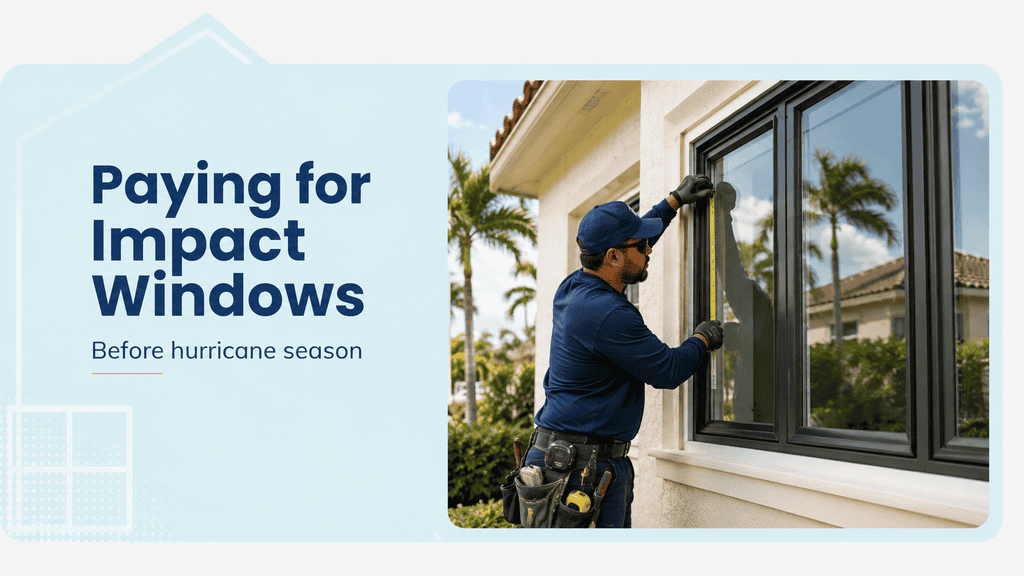
If you’re comparing impact windows financing Florida homeowners can use, the financing choice deserves as much attention as the windows themselves. This guide explains how to plan an impact window or door project before hurricane season, how Ygrene Property Assessed Clean Energy (PACE) financing works and what to compare before signing. You’ll also learn how PACE differs from cash, home equity borrowing and other financing options.
Why planning impact windows and doors before hurricane season matters
The Atlantic hurricane season officially runs from June 1 through November 30, according to NOAA’s hurricane season guidance. Tropical cyclones can occur outside that period, so those dates should be treated as a planning window rather than a guarantee of when severe weather can happen.
For a Florida homeowner considering replacement windows or doors, starting early creates room for decisions that shouldn’t be rushed. You may need time to:
- Have the existing openings evaluated.
- Decide which windows, entry doors or other openings need replacement.
- Confirm that the proposed products meet applicable building requirements.
- Get contractor estimates and understand what each estimate includes.
- Compare financing methods and total costs.
- Complete permitting and installation according to local requirements.
That planning period matters because the product price is only one part of the project. Removal, installation, permits, finishing work and changes discovered after work begins may affect the final contract.
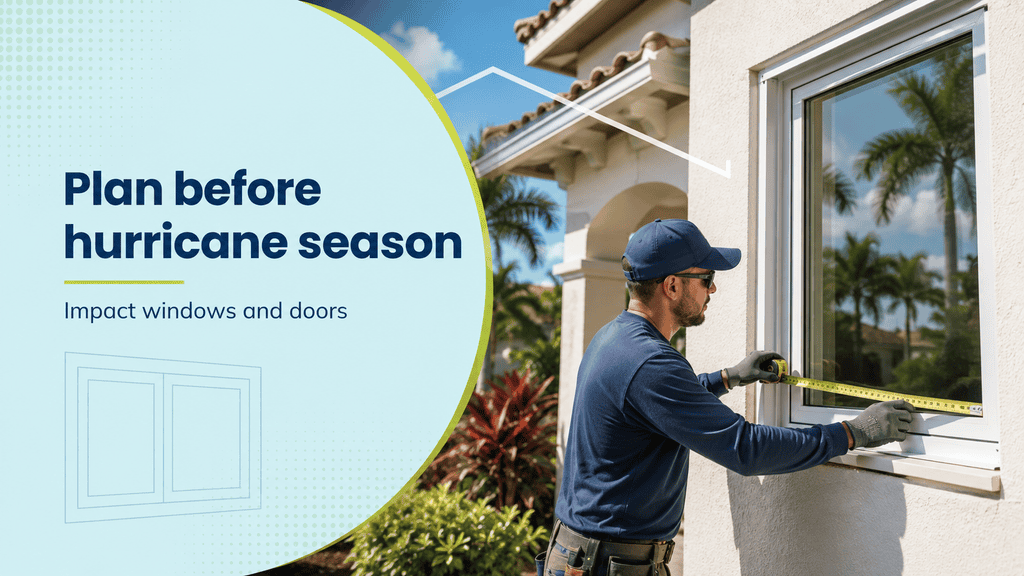
If you’re already in hurricane season, the same principle applies. An approaching storm isn’t a good reason to skip contractor due diligence or sign financing documents you haven’t reviewed. Emergency preparation and a permanent window replacement project have different timelines.
Impact-rated doesn’t mean every product fits every Florida home
Florida building requirements depend on factors including the property’s location, applicable wind conditions and the type of opening. Products can also have specific Florida approvals and limits of use.
A contractor should identify which products are suitable for your property and obtain any required permits. Homeowners can also review applicable product approvals and current building-code requirements through official Florida building resources.
For PACE financing purposes, Florida law specifically includes certain replacement windows and doors that are energy-efficient, impact-resistant, wind-resistant or hurricane-rated within its definition of qualifying improvements. Storm shutters are also included. Homeowners can review the applicable provisions in Florida Statute 163.08.
That doesn’t mean every property, product or project automatically qualifies for a particular PACE program. Program availability and underwriting requirements still apply.
What can qualify for impact window and impact door financing?
Ygrene currently lists impact windows, impact doors and skylights among the improvements that may qualify for PACE financing. Homeowners considering these projects can review Ygrene’s current windows and doors financing information before finalizing a contractor scope.
For a window and door project, the first useful question isn’t “How much can I finance?” It is “What exactly is included in my project?”
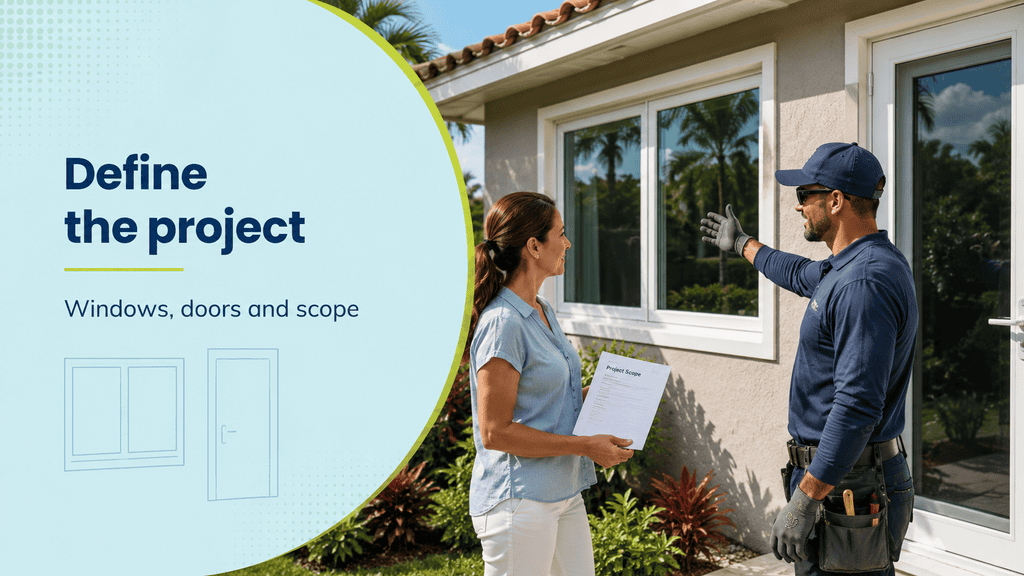
A contractor proposal might cover only windows. Another could include impact-rated entry doors, sliding doors, removal of old materials, permits and finishing work. Before comparing financing offers, make sure you’re comparing the same project scope.
A useful written estimate should make it clear which openings are being replaced and what products are proposed. Ask about permits, installation, disposal, repair to surrounding finishes and any work specifically excluded from the price.
A hypothetical Florida project
Consider a homeowner with aging windows, a sliding glass door and a front entry door. The windows have deteriorated seals and the sliding door needs replacement, so the homeowner decides to price a broader impact-resistant opening upgrade.
One contractor quotes only the windows. Another includes the windows, sliding door and entry door. A third price appears lower but excludes permitting and some finishing work.
Comparing the financing payment before resolving those differences wouldn’t tell the homeowner which option costs less. The homeowner first needs a complete project cost, then can compare cash, hurricane window financing, impact door financing or a combination of funding methods on equal terms.
This is especially useful with PACE because the assessment is connected to qualifying improvements on the property. The financed scope should match the work that has actually been reviewed and approved.
Confirm that Ygrene serves the property
PACE is authorized locally. Ygrene isn’t available at every Florida address.
Ygrene currently operates in approved jurisdictions across 24 Florida counties, with residential availability differing by county and municipality. Some areas listed by Ygrene are commercial-only. Before budgeting around PACE, check the current Ygrene Florida service areas for your property.
Checking the address early prevents you from planning a project around financing that isn’t currently available in your jurisdiction.
How impact windows financing Florida homeowners use through PACE works
PACE financing works differently from a conventional personal loan.
With Ygrene PACE financing, a qualifying property improvement is financed through a property assessment. The assessment is secured by the improved property and repaid through the property-tax system rather than through a separate conventional loan account. A first-priority lien for the total amount financed will be placed on the property as collateral.
Ygrene currently states that available repayment terms can extend up to 20 years for residential properties and use fixed rates, although available terms depend on the service area and type of improvement. Approval considers property equity and the homeowner’s ability to repay. Ygrene also uses a soft credit pull to verify certain underwriting criteria, which it states doesn’t affect the applicant’s credit score.
Homeowners who want to understand the process before applying can review how Ygrene PACE financing works, including application, project completion and repayment information.
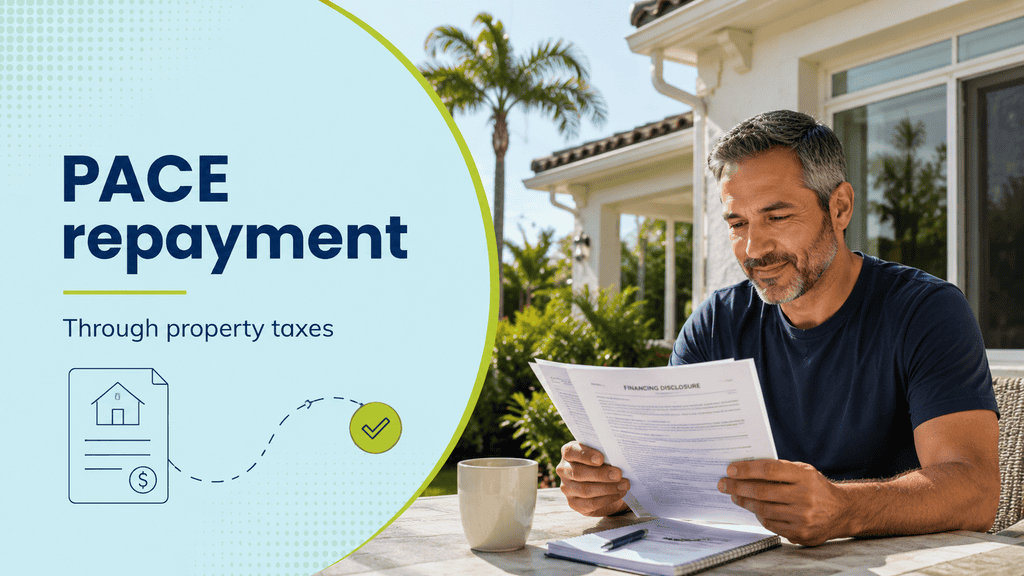
How repayment can affect your property-tax payments
A PACE assessment becomes part of the property-tax obligation.
If you pay your property taxes yourself, the assessment is collected with those taxes according to the payment practices in your county. If your mortgage servicer collects property taxes through escrow, the assessment can affect the amount collected for property taxes.
That distinction matters when budgeting.
A homeowner shouldn’t compare a proposed PACE assessment only with the monthly payment shown for a personal loan or home equity line of credit (HELOC). Instead, look at the annual assessment and determine how it may change your property-tax or escrow obligation.
If you have a mortgage and escrow account, ask your mortgage servicer how a new assessment could affect escrow calculations. Florida’s PACE statute includes provisions addressing how residential assessments interact with mortgage servicing and escrow arrangements.
The assessment is secured by your property
This is a material difference from unsecured financing.
Ygrene states that PACE financing is secured through a recorded lien on the improved property. Florida law also provides specific rules governing recorded PACE assessments and their relationship to other property obligations.
Before signing, understand the assessment amount, finance charges, repayment schedule and total repayment amount. You should also consider how the assessment could affect a sale, refinance or mortgage transaction.
Florida law requires residential PACE disclosures addressing issues including the property-tax collection process, the recorded assessment and the possibility that a mortgage lender may require the remaining financing balance to be paid during a sale or refinance.
If you expect to sell or refinance during the financing term, discuss the assessment with your lender or mortgage servicer before making a decision.
Florida homeowners have specific disclosure protections
Residential PACE financing in Florida comes with statutory requirements that go beyond simply providing a payment quote.
Among other requirements, Florida law addresses financing estimates, disclosures, oral confirmation procedures and cancellation rights for residential PACE agreements. Because these requirements can change, homeowners should review the current statutory language and the documents provided for their specific transaction.
Ygrene also explains its current disclosure process on its consumer protection page. Homeowners should use those documents to understand the assessment, repayment structure, potential benefits, risks and other obligations before signing.
A disclosure document is most useful when you read it closely enough to understand what the figures mean for your household.
How PACE compares with other window financing options
No single method of paying for impact windows or doors is automatically the best choice. The right comparison depends on available cash, home equity, credit profile, repayment preference and how long you expect to own the property.
| Funding method | How to evaluate it for a window or door project |
| Cash | Compare the project cost with the amount of cash you can spend without undermining your emergency savings or other near-term needs. There are no financing charges, but the full cost is due upfront. |
| Home equity loan | Usually provides a lump sum secured by home equity. Compare the rate, closing costs, repayment period and monthly payment. |
| HELOC | Provides a revolving credit line secured by home equity. Rates are commonly variable, so consider how payments could change. |
| Personal or contractor financing | Review the rate, fees, payment schedule, promotional terms and what happens after any introductory period. Qualification may depend heavily on credit. |
| PACE financing | Compare the assessment amount, fixed rate, finance charges, term, total repayment, property-tax effect, first priority lien on the property, and implications for a future sale or refinance. Property and project eligibility apply. |
The Consumer Financial Protection Bureau’s explanation of home equity loans and HELOCs notes that both use the home as collateral. A home equity loan generally provides a lump sum, while a HELOC provides access to a revolving line of credit. HELOCs may also have variable interest rates.
That makes payment structure an important comparison point. PACE may spread qualifying project costs across a longer period, but a longer term can also mean paying finance charges for longer. A lower periodic payment shouldn’t be evaluated separately from total repayment cost.
Compare the same numbers across every offer
For each financing option, write down:
- The amount being financed.
- The interest rate and whether it can change.
- Upfront fees and finance charges.
- The repayment period.
- The expected periodic payment or annual assessment.
- The total amount you would repay under the stated terms.
- Early-payoff rules.
- Any property, lien, escrow, sale or refinance implications.
Then compare those figures alongside the contractor price.
If one financing quote covers $30,000 of work while another covers $35,000 because it includes an additional impact door, comparing only their payments gives you the wrong picture. Project scope and financing terms need to be evaluated together.
A checklist before financing impact windows or doors
The time before signing is when you have the most control over the project. Use the following workflow whether you’re considering PACE, a home-equity product, hurricane window financing from a contractor or another method.
1. Define the openings you want to replace
List every window, exterior door, sliding door and other opening included in the proposed project. Decide whether you’re completing the entire home or only part of it.
Ask the contractor to identify the exact products proposed for each opening.
2. Verify product and permit requirements
Ask which Florida product approvals apply and whether the products are appropriate for your property’s location.
Confirm who will obtain permits, schedule required inspections and close the permit after installation.
3. Obtain a complete contractor price
The proposal should show the project scope clearly enough that you know what you’re financing.
For larger PACE projects, Florida law requires program administrators to provide certain information about obtaining estimates from unaffiliated qualifying improvement contractors. Review the current statutory requirements before relying on a single proposal.
4. Confirm property and project eligibility
If you’re considering Ygrene, verify that the property is within a participating jurisdiction and that the proposed work qualifies.
Don’t assume that eligibility for one project, one address or one homeowner means another will qualify.
5. Separate project cost from financing cost
Start with the contractor’s price. Then identify the amount financed, interest, program or financing charges and total repayment.
This makes it easier to see what you’re paying for the installation and what you’re paying to finance it.
6. Understand how you will actually repay it
For PACE, determine how the annual assessment may affect your property-tax payment or mortgage escrow.
For a HELOC, home equity loan, personal loan or contractor plan, calculate how the scheduled payment fits with existing obligations.
7. Think about your ownership timeline
If there’s a reasonable chance you’ll sell or refinance before the assessment ends, ask how payoff would work before committing.
Speak with your mortgage lender or servicer if you need case-specific guidance about how a PACE assessment would interact with your mortgage.
8. Read the documents before signing
Review the assessment amount, interest rate, finance charges, repayment period, total repayment amount and early-payment provisions.
Also review the contractor agreement separately. Financing approval doesn’t replace your responsibility to understand the construction contract, warranties, scope and change-order process.
Questions to ask before choosing impact window or door financing
A useful financing discussion should produce specific answers, not simply a payment estimate.
Ask the financing provider:
- What amount am I financing after all applicable charges?
- What interest rate applies and can it change?
- What is the total repayment amount under the proposed term?
- How will I make payments and when will the first obligation appear?
- Can I make an early or partial payoff and what conditions apply?
- What happens to the financing if I sell or refinance the property?
- What disclosures should I review before signing?
Ask the contractor a separate set of questions about the physical project. Confirm which products will be installed, the permit process, warranty responsibilities, expected project scope and how change orders are approved.
Keeping the two conversations separate helps prevent a common planning mistake: treating financing approval as approval of the contractor’s workmanship, price or product selection. Ygrene provides financing for qualifying improvements, while the contractor performs the installation.
Check your property and project before moving forward
Before choosing impact window or impact door financing, confirm that the proposed work qualifies, verify that PACE is available at your property and compare the complete financing terms with other realistic ways to pay for the project.
Florida homeowners considering Ygrene can then check their property eligibility and review the specific assessment documents before deciding whether PACE financing fits their plans.
FAQs
Can impact windows be financed through Ygrene in Florida?
Impact windows and impact doors are currently listed among Ygrene’s eligible PACE-financed improvements. Florida law also recognizes qualifying impact-resistant, wind-resistant and hurricane-rated windows and doors within its residential PACE framework. Property location, project eligibility and underwriting requirements still need to be confirmed.
Is Ygrene impact window financing a traditional loan?
No. Ygrene provides PACE financing, which is structured as a property assessment secured by the improved property and repaid through property taxes. That structure has different payment, lien, sale and refinance considerations from a conventional personal loan.
Does Ygrene check my credit score?
Ygrene states that it doesn’t base approval on your credit score, although it performs a soft credit pull to verify certain underwriting criteria. Approval also considers property equity and the homeowner’s ability to repay, so a particular property or applicant isn’t guaranteed to qualify.
How long can Ygrene financing for windows and doors last?
Ygrene currently states that qualifying projects may have repayment terms of up to 20 years. Available terms vary by service area and type of improvement, so homeowners should use their actual financing documents when comparing repayment options.
Can I use impact door financing as part of a larger window project?
Potentially. Impact doors are among Ygrene’s currently listed eligible improvements, but the full project must be reviewed for eligibility. Ask the contractor to separate or clearly describe windows, entry doors, sliding doors and any other work so you know exactly what the financing covers.
What happens to PACE financing if I sell or refinance?
A remaining PACE assessment can affect a future sale or refinance. A mortgage lender will very likely require payoff as part of a transaction, so discuss your specific circumstances with your lender, mortgage servicer and relevant real-estate or financial professionals before proceeding.
Should I finance impact windows before hurricane season starts?
Starting early can give you more time to compare contractors, verify products, complete permitting and review financing without rushing. NOAA identifies June 1 through November 30 as the Atlantic hurricane season, but storms can occur outside those dates, so project timing should also reflect your home’s condition, contractor availability and financial situation.